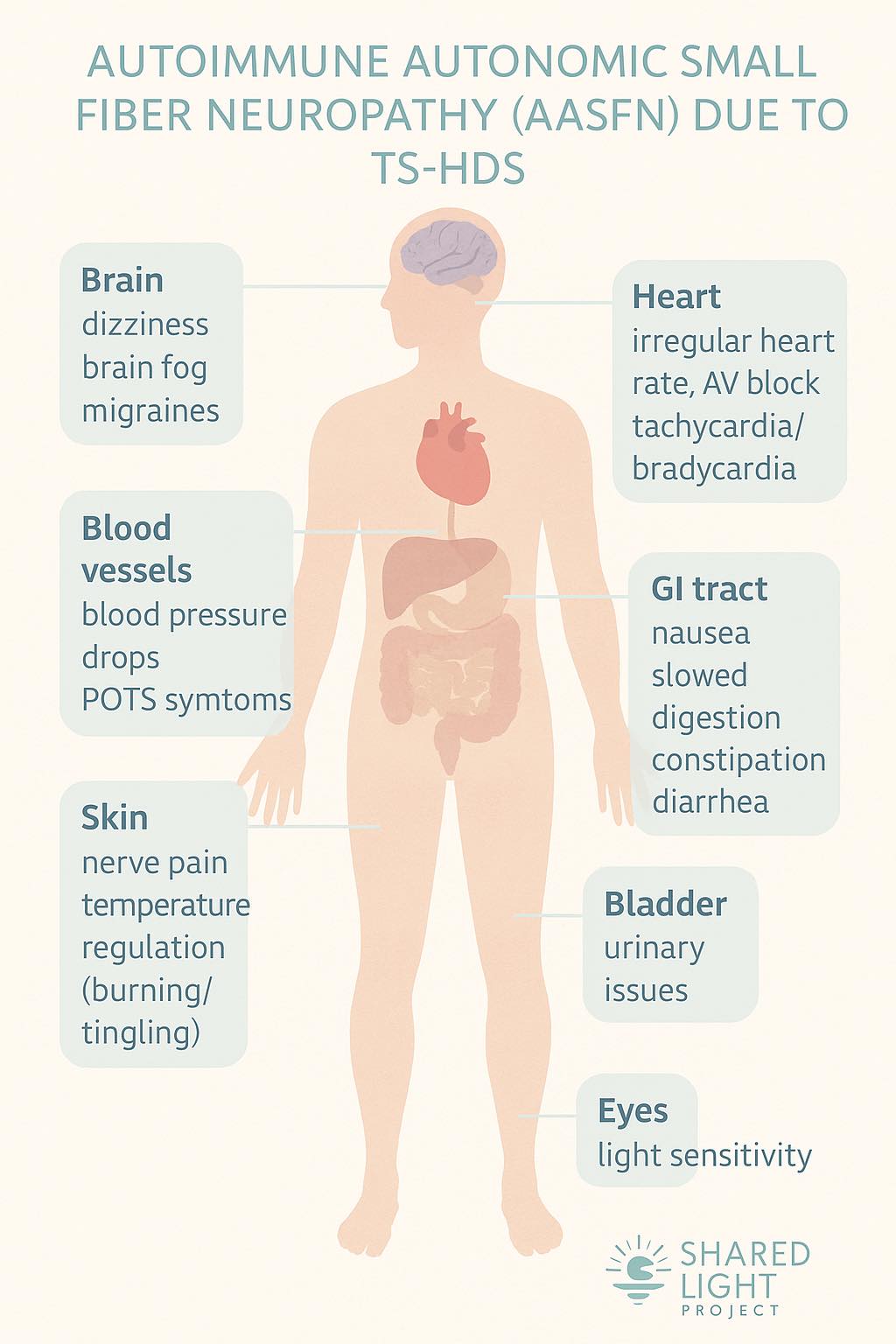
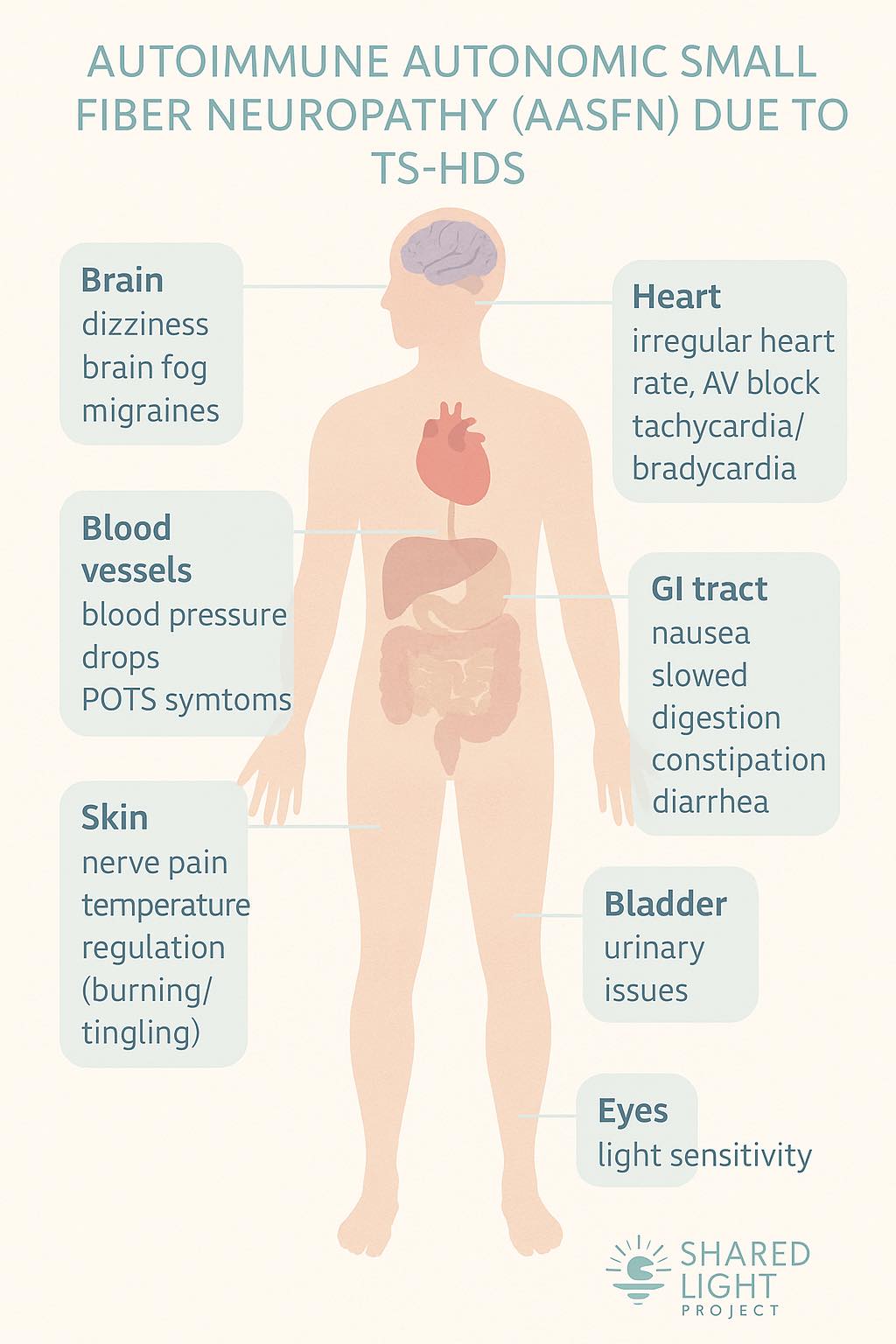

Autoimmune Autonomic Small Fiber Neuropathy (AASFN) is a rare, chronic condition in which the body’s immune system mistakenly attacks the small unmyelinated nerve fibers that regulate the autonomic nervous system – especially those responsible for heart rate, blood pressure, temperature regulation, digestion, and bladder function.
In this form, the condition is linked to the presence of TS-HDS antibodies (targeting Tri-sulfated Heparan Disaccharide), which are autoantibodies found in some autoimmune dysautonomias. A positive TS-HDS test – especially in high titers (like mine at 80,000), indicates an autoimmune attack on autonomic nerve fibers, leading to progressive dysfunction.
What Makes It Different:
Unlike general dysautonomia or POTS, AASFN due to TS-HDS:
- Has an autoimmune basis (immune system attacking nerve tissue)
- Primarily affects small fiber nerves, which are invisible on standard tests like MRIs or EMGs
- Often causes a combination of symptoms
- Heart rate and BP swings (tachycardia, bradycardia, hypotension or hypertension)
- GI issues (nausea, gastroparesis, constipation, or diarrhea)
- Temperature dysregulation (feeling hot or cold without reason)
- Chronic fatigue, dizziness, presyncope or fainting
- Pain, burning, or numbness in the skin due to small fiber sensory involvement
Spiritual & Emotional Toll:
Because these fibers control involuntary functions, this condition can feel like your body is no longer under your own command, which can lead to:
- Grief over lost independence
- Hypervigilance and anxiety
- Feeling misunderstood, since many symptoms are “invisible” but debilitating
Why It’s Serious:
AASFN can progressively damage autonomic nerves over time, and when untreated, may lead to:
- Severe postural instability
- Syncope or sudden drops in heart rate or BP
- Progressive autonomic failure
- Neuropathic pain or small fiber degeneration
Treatment Approaches:
Immunotherapy: IVIG, corticosteroids, or immunosuppressants may be used if damage is immune-mediated. Support for IVIG and SCIG is limited because new research has been showing that IVIG is not effective for TS-HDS types of small fiber neuropathy. (In my case, I was denied 6 times by insurance for treatment, despite my doctors going to bat for me.)
Symptom support: Medications for BP, HR, pain, GI motility, and mast cell stabilization (I’ve tried so many meds and because of heart rate swings, I am unable to tolerate them safely)
Lifestyle tools: Salt, hydration, compression, pacing, and a nervous system-safe environment (I keep that thang on me: pink salt)
Mobility Aids: Having access to mobility aids when needed is essential for maintaining a functional life. Some people need mobility aids for cardiac issues, others because of the heaviness and pain in their extremities. Power wheelchairs can be incredibly helpful when living with AASFN and are often covered by insurance when AASFN symptoms affect your ADLs.
Close cardiac and neurological monitoring is essential. Sometimes even pacemakers or implantable monitoring devices are required.
Why It’s Hard to Explain:
On the outside, someone may look okay. But on the inside, their body is often in a constant state of regulation crisis, working overtime to do what most bodies do automatically.
It’s not just physical…it’s emotional, spiritual, and exhausting.
What Helps The Most:
• Compassion over curiosity (you don’t need to “fix” it – just sit with someone going through it)
• Flexibility and grace if we need to cancel, reschedule, or rest
• Check-ins that remind us we’re not forgotten
• Trust that we’re doing everything we can, even when it looks like we’re resting “too much”
From My Heart to Yours:
We’re not lazy. We’re not fragile. We’re a soul living in a body that needs more care than most.
We’re still the same person, still full of purpose, love, laughter, and light.
But some days, our light shines more quietly, and that’s okay.
Thank you for being someone who holds space for us, even when you can’t see the storm we’re navigating.
You are part of our shared light. 

 Shared Light Project
Leave a comment